The Kumar Method
A retired accountant walked onto Instagram with zero followers and one idea — be the last thing the feed expects. Here’s the mechanic underneath it, and how to run it in your own niche.
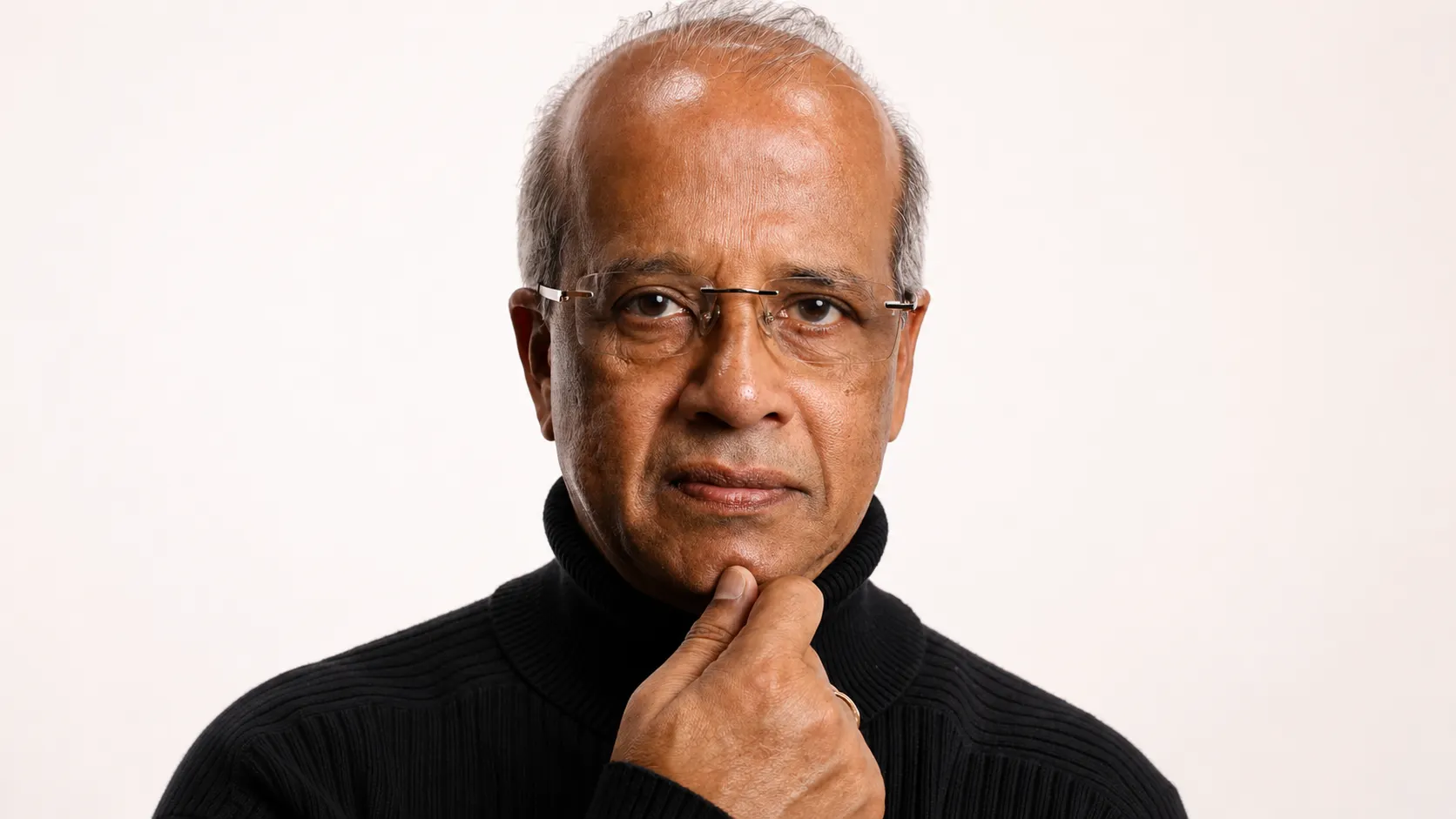
In mid-2026, a man who introduced himself only as Kumar posted his first-ever Instagram reel. No audience, no creator résumé, no trend to ride. He stared down the camera, stated flatly that he was a retired accountant, and declared he was going to become the biggest accounting influencer on earth — all shot with the dramatic lighting and hard cuts of a thriller. Then his wife stepped into frame and told everyone her husband just wants to be famous, so please follow him.
The reel reportedly crossed eleven million views. Within days the account had hundreds of thousands of followers, and within about a week it was near a million. Marketers immediately gave the format a name — the Kumar Method — and started dissecting it frame by frame. Most of them fixated on the editing. That’s the wrong thing to copy.
The whole method lives in one gap: What the feed predicts — a retired accountant, boring, safe, skip — versus what it delivered: a movie villain in rimless glasses.
- 11M+
- views on his debut reel
- ~1M
- followers gained, from zero, in roughly a week
- 6
- posts it reportedly took to hit 1.1M followers
- $0
- paid ad spend behind the growth
- 331K
- an agency client’s copycat video, views in three days
(These figures are self-reported by Kumar’s account and by agencies breaking down the format. Worth naming, since a lot of the loudest numbers come from people selling “Kumar-style” video services.)
01 — The mechanic: the expectation gap
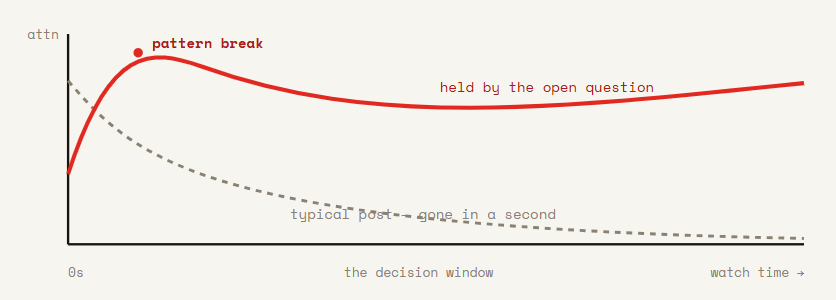
Every feed is a prediction machine, and so is the person scrolling it. Your brain sorts a video into a bucket — finance guy, gym guy, productivity guy — in under a second, and decides whether to keep watching before you consciously read a word. Kumar’s move was to make the bucket and the contents violently disagree. The label said “retired accountant.” The execution said “antagonist in a heist film.” That mismatch is a scroll-stopper because your brain refuses to move on until it resolves what it’s looking at.
He didn’t create a viral video. He created a character — and the character was built entirely out of contrast.
Don’t copy his editing. Copy his mismatch.
02 — Why it holds: four levers, not one
The disruption gets the pause. These are what turn a pause into a follow.
a. The authority paradox. He opens with real credentials — decades in accounting — then refuses to lecture. Instead of “follow me, I’m the expert,” the framing is “watch me try to pull this off.” Same authority, underdog posture. You end up respecting him and rooting for him, which almost no expert content manages at once.
b. The human beat. The wife cameo does more work than the editing. It’s social proof, it’s a laugh that lowers the stakes, and it stops his ambition from reading as cold or calculated. One warm, self-aware second makes the whole thing likable.
c. Story over niche. Almost nobody followed for accounting tips — he hadn’t given any. They followed to find out what happens next. Can a gray-haired boomer actually become a top creator? That open question is a cliffhanger, and cliffhangers pull people back. Returning viewers are exactly the behavior the algorithm rewards.
d. Instant clarity. Within seconds you know who he is, what he wants, and why to care. Most creators bury all three under a tips list. He led with them.
03 — The engine: the amplifiers did the ads
Kumar’s reach didn’t come from his account alone. The format was so clean that other creators — marketers, analysts, strategists — piled in to explain it, praise it, and remix it. Every breakdown was free distribution, and every copycat trained the algorithm on the format itself, so the behavioral pattern kept transferring to new videos. A format designed to be talked about builds its own reach. That’s the part you can’t buy, and the part most people miss when they only study the original clip.
Build your own expectation gap
Name the boring label in your world. The dull, safe, professional stereotype of “someone in your field.” That stereotype is your raw material.
Flip the execution, not the facts. Keep your real credentials; deliver them in a register nobody expects for your niche — cinematic, deadpan, theatrical, whatever breaks the bucket.
Write a mission, not a tips video. Announce what you’re setting out to do, with a little swagger. Give people a question to follow, not a lesson to sit through.
Add one human beat. A laugh, a partner, a flaw — something that makes you likable instead of self-serious.
Make it worth breaking down. The more legible your format, the more other people will explain it for you.
04 — The catch: packaging gets attention, substance keeps it
A sharp reel is not a creator business. The Kumar Method proves how fast the creator economy will upgrade a spike into a “movement” — a treatment becomes a “method,” a face becomes a “brand” — before any of it has been tested over time.
The gap gets people to stop. Whether they stay depends on what you actually give them once they do. Most copies of this format will flop precisely because they nail the mismatch and have nothing behind it. Build the gap to earn the attention. Then have something real waiting on the other side of it.
That’s the whole thing. Not the red text, not the hard cuts, not the villain grade. Just a retired accountant who understood that in a feed built on prediction, the most valuable move is to be unpredictable — on purpose, and for a reason.
Sources: reporting and format breakdowns from Masterhooks, Trueframe, Bennett Creative, and BuzzInContent (June–July 2026). View and follower figures are self-reported by the creator’s account and by agencies analyzing the format.
Btw, this article was completely written by Claude.